
Tea Scoop
Showing all 27 resultsSorted by popularity


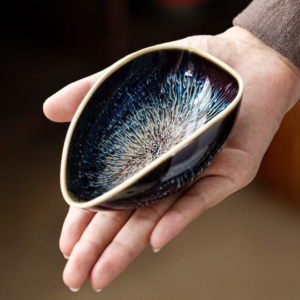

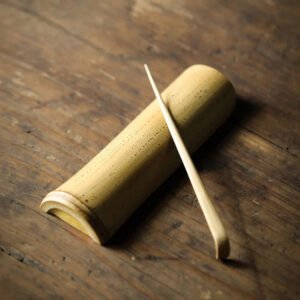


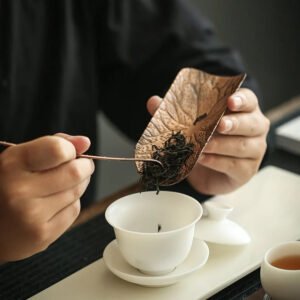
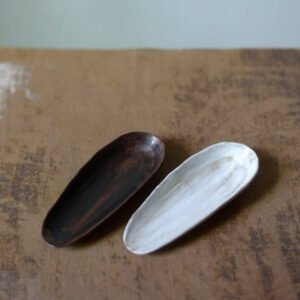






Showing all 27 resultsSorted by popularity
Tea Scoops & Spoons: The Elegance of the “Perfect Measurement”
In the ritual of Gongfu tea, the journey from canister to pot is a sacred transition. While it’s tempting to use your fingers, doing so is often considered the “unforgivable sin” of tea preparation—oils from the skin can compromise the integrity of delicate leaves.
Enter the Tea Scoop (or Tea Spoon). These humble yet vital tools, known in Chinese as Chaze (茶则) and Chachi (茶匙), ensure that your leaves are handled with the respect they deserve, maintaining their purity from the very first scoop.
The Terminology: Chaze vs. Chachi
While often used interchangeably in English, the Chinese tea tradition distinguishes between the two based on their specific roles:
-
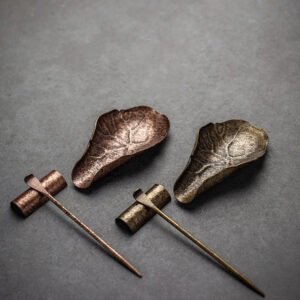
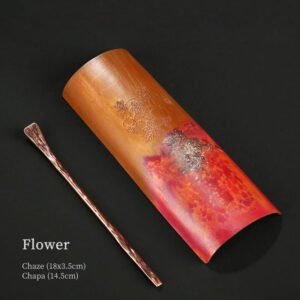
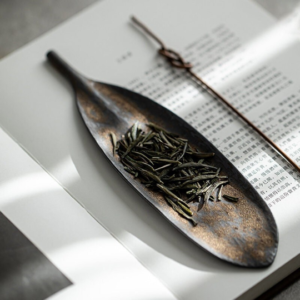
The Chaze (茶则 – Measuring Tool): This is your primary “rule” or measure. It is used to scoop leaves from the Tea Canister to assess the quantity. Traditionally, the Chaze helped determine the strength of the brew, though many modern tea masters now pair them with electronic scales for ultimate precision.
-
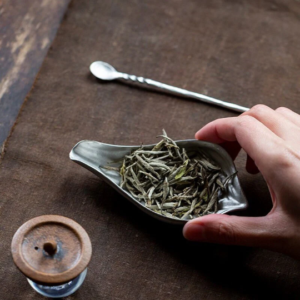
The Chachi (茶匙 – Transferring Spoon): This tool is more agile, used to gently nudge or transfer leaves from the Chaze into the narrow opening of a Teapot or Gaiwan.
-
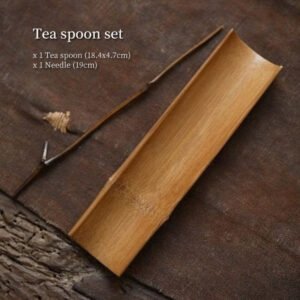
The Chazhen (茶针 – Tea Needle): You will often see these paired with our scoops. The needle is an essential “rescue tool” used to clear leaf blockages from a teapot’s spout or to keep a tea strainer flowing smoothly.
Exploring Materials: From Zen Bamboo to Regal Copper
The material of your scoop sets the tone for your entire tea set.
| Material | Best For | Vibe & Characteristics |
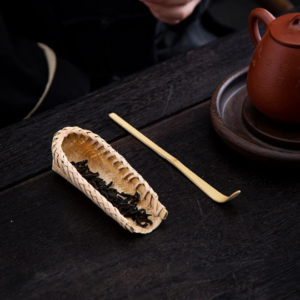
| Bamboo & Root | Daily Gongfu | Lightweight, eco-friendly, and deeply rooted in Zen tradition. Our Old Bamboo Root scoops are unique, one-of-a-kind pieces. |
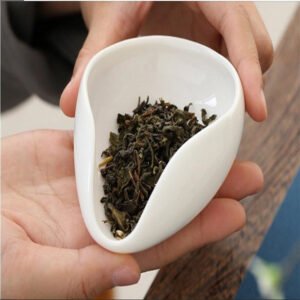
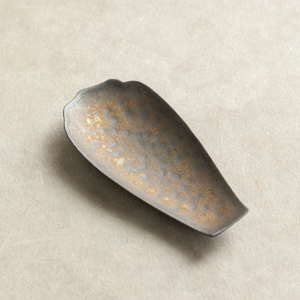
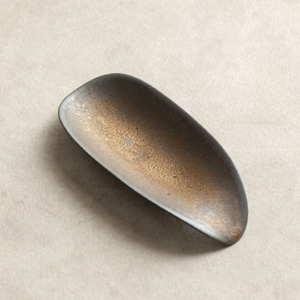
| Ceramic & Clay | Minimalist Sets | Neutral and easy to clean. Porcelain scoops won’t retain aromas, making them perfect if you switch between flavored and pure teas. |
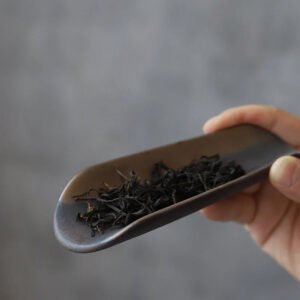
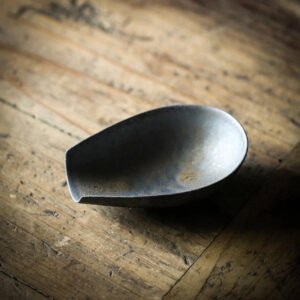
| Metal (Copper/Tin/Brass) | Collectors & Heavy Teas | Durable and substantial. Purple Copper and Handmade Tin scoops develop a stunning patina over years of use. |
| Exotic Wood (Walnut/Ebony) | Elegant Displays | Features rich, dark grains that provide a beautiful contrast to green or white tea leaves. |
The Tea Ecosystem: Coordination and Flow
A tea scoop shouldn’t work in isolation. To create a seamless “Tea Stage,” consider these pairings:
-
The Tea Canister: Your scoop should be compatible with the mouth of your Tea Canister. A long, slender Bamboo Tea Spoon is perfect for deep jars, while a broader Ceramic Shovel works well for wide-mouthed tins.
-
The Electronic Scale: For those seeking the “Golden Ratio,” use a Black Walnut or White Ceramic spoon to transfer leaves onto a scale before they hit the pot.
-
The Matcha Ritual: If you are preparing Matcha, look for the Chashaku (茶杓). Our bamboo scoops are specifically weighted to measure the exact shaku (scoop) of powder needed for a perfect bowl of froth.
How Many Scoops per Cup?
One of the most frequent questions we hear is: “How many scoops is enough?”
The Master’s Secret: Unlike baking, tea is an intuitive art. The “perfect” amount depends on the leaf size (rolled Oolongs vs. flat Longjing) and your personal preference for strength. Over time, your Tea Scoop becomes an extension of your hand—you’ll begin to “feel” the correct weight of the leaves just by the way they sit in the scoop.
Caring for Your Tools
-
Dry is Best: Most tea scoops, especially Bamboo and Wood, should never be left soaking. Wipe them with a dry, soft cloth after use.
-
Patina Preservation: For Copper and Brass, avoid abrasive cleaners. Let the natural oxidation process add character to the metal over time.
-
Ceramic Care: While our Gilded and Iron-imitating ceramic spoons are durable, they are best hand-washed to preserve the intricate surface details.
Find Your Grip
Whether you are drawn to the rustic charm of Banded Bamboo or the industrial elegance of Alloy Weaving, our collection of 27+ handcrafted scoops is designed to bring precision and beauty to your tea table.